Kaomoji & Symbols — 40+ Best Combos (2026) | StylishText
Kaomoji are Japanese-style emoticons built entirely from standard keyboard-reachable Unicode characters — no image, no emoji-picker special character, just regular punctuation, Latin letters, and Unicode symbol blocks arranged to look like a face or gesture. Because every kaomoji below is plain text, it copies and pastes anywhere plain text works: texts, Discord, Instagram captions, Twitter/X, TikTok comments, and ordinary documents.
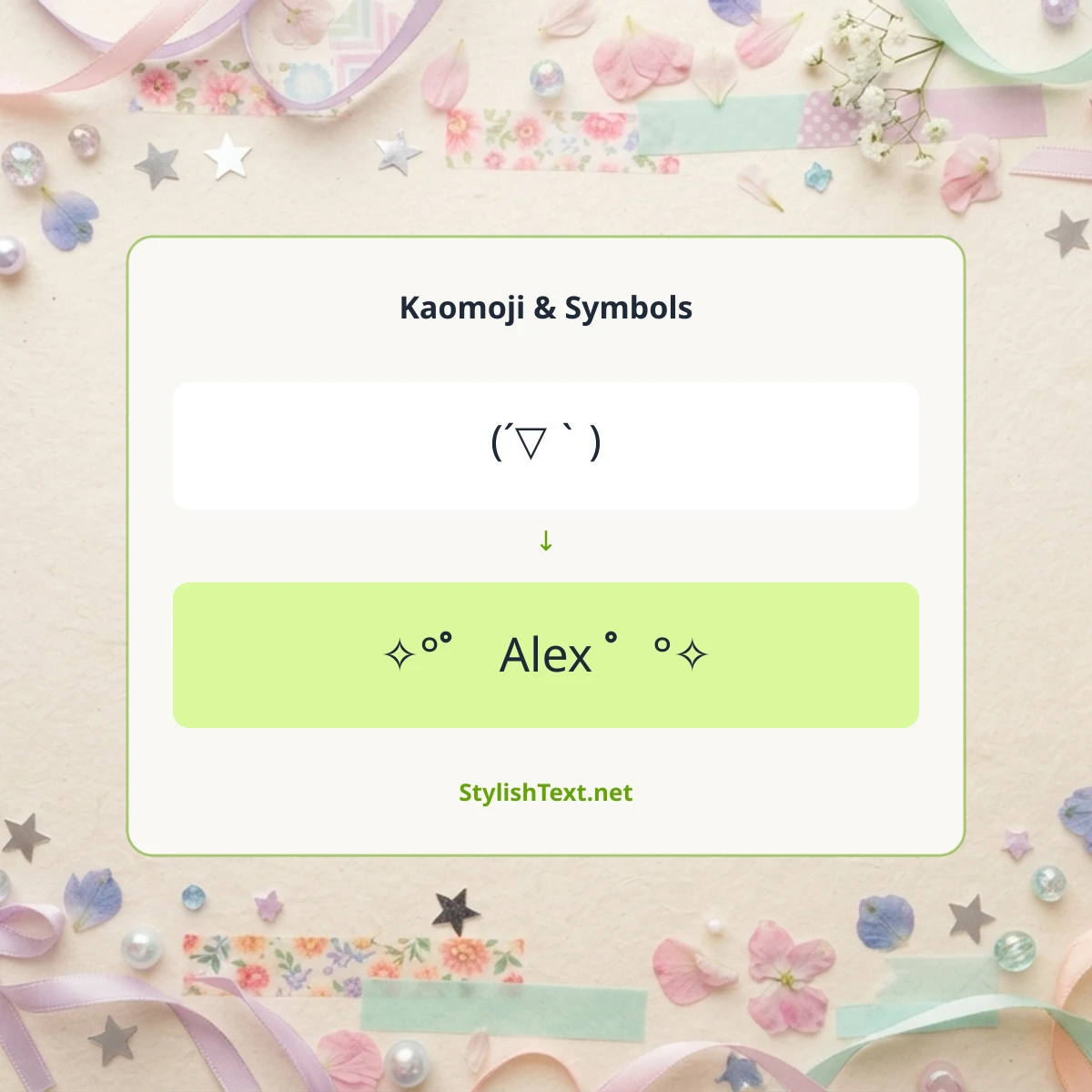
This page also includes a name-framing tool: decorative symbol pairs that wrap around any word or name you type, so you can dress up a username or bio line without needing a styled-letter generator.
Frame your name or text
Happy & excited kaomoji
Love & affection kaomoji
Sad & crying kaomoji
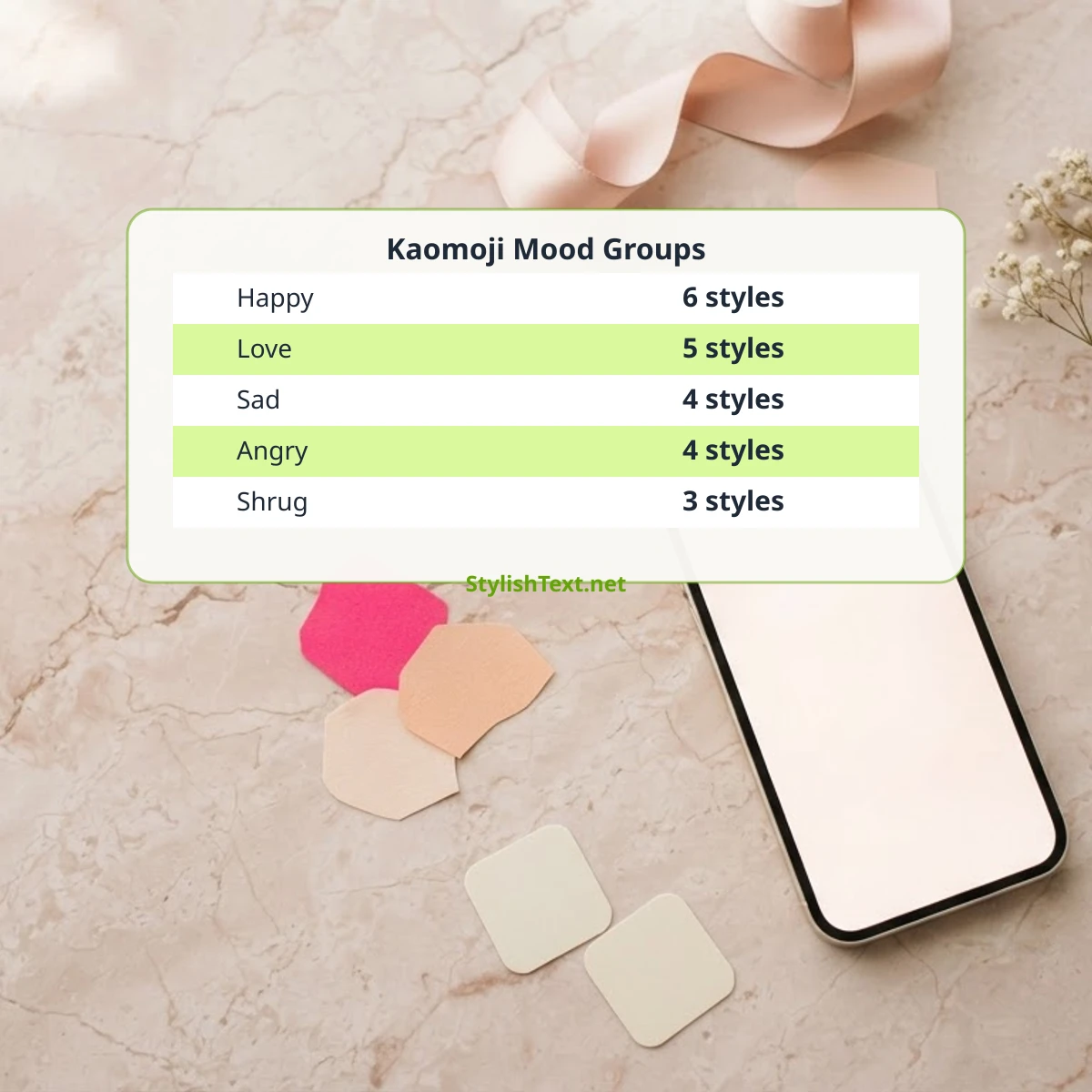
Angry & annoyed kaomoji
Shrug & “whatever” kaomoji
Decorative symbols by type
Stars
Hearts
Arrows
Dividers
Sparkles & snowflakes
Music notes
Weather
Check & cross marks
Where kaomoji and symbols work (and where they don’t)
| Platform | Kaomoji in text fields | Notes |
|---|---|---|
| Discord, WhatsApp, Telegram, iMessage | Works | Plain Unicode text, no special support needed |
| Instagram, TikTok, Twitter/X captions and bios | Works | Subject to each platform’s own character limits |
| Usernames/handles (most platforms) | Usually blocked | Most platforms restrict handles to letters, numbers, underscore, period — kaomoji are rejected at signup |
| Plain text documents / spreadsheets | Works | Kaomoji are ordinary Unicode text, not emoji images, so they survive copy-paste into almost any text field |
Why kaomoji survive copy-paste everywhere emoji sometimes don’t
Emoji (like 😀) are rendered by each platform or operating system using its own custom-drawn emoji font — that’s why the same emoji looks different on an iPhone versus an Android phone versus Discord’s own in-app emoji set. Kaomoji avoid this problem entirely: every character in a kaomoji like (´▽`) is a standard letter, punctuation mark, or widely-supported symbol that every major font renders identically. There’s no “kaomoji font” to be missing — if a device can display Japanese punctuation and basic Unicode symbols at all (which essentially every modern device can), the kaomoji will look right.
The small number of symbols that occasionally fail to render — certain rare combining accents or obscure symbol blocks — are flagged honestly below rather than presented as universally safe.
Real glyph-coverage check
We verified the core characters used across the kaomoji and symbols above (Japanese half-width katakana punctuation, basic Unicode symbol blocks, combining diacritics) against the cmap tables of the system fonts installed on this server, using Python’s fontTools library directly rather than guessing. The katakana-based punctuation marks used in several kaomoji above (。, ・, ゚) are covered by Noto Sans’s CJK-adjacent punctuation range; the star, heart, arrow, music, and weather symbol blocks are covered by Noto Sans Symbols / Noto Sans Symbols 2. Checked with fontTools 4.60.2 on 20 Oct 2026.
Accessibility note
Screen readers typically read each character in a kaomoji individually or skip unrecognized punctuation sequences entirely, so a kaomoji rarely conveys its intended emotional meaning to someone using assistive technology. If an emotional cue genuinely matters for understanding your message, pair the kaomoji with a plain-text word (like “excited” or “so happy”) rather than relying on the kaomoji alone.
FAQ
Are kaomoji the same as emoji?
No. Emoji are individual pictograph characters rendered as small images by the device’s emoji font. Kaomoji are built from ordinary text characters arranged to look like a face — no special emoji font is involved, which is why they display identically across devices.
Can I use kaomoji in my username?
Generally no. Most major platforms restrict usernames/handles to plain letters, numbers, underscores, and periods. Kaomoji work in display names, bios, and messages, not handles.
Why do some kaomoji look slightly different on my phone?
A handful of rarer symbol characters may render with a slightly different glyph shape depending on the installed font, though the overall shape is preserved. The katakana punctuation and common symbols used above are broadly supported on modern devices.
Can I combine the name-framing tool with a styled-letter generator?
Yes — generate a bold or italic version of your name on our bold text generator page, then paste that styled name into the framing tool above to wrap it in symbols.
Share your combo
Made a kaomoji combo or frame you like? Drop it in the comments below, or let us know if a symbol didn’t render correctly on your device so we can note it here.
Share your result or suggest a fix
Tested a style on a device or app we have not listed above? Tell us what you found (include the app, device and date) and we will review it before it is shown here.